
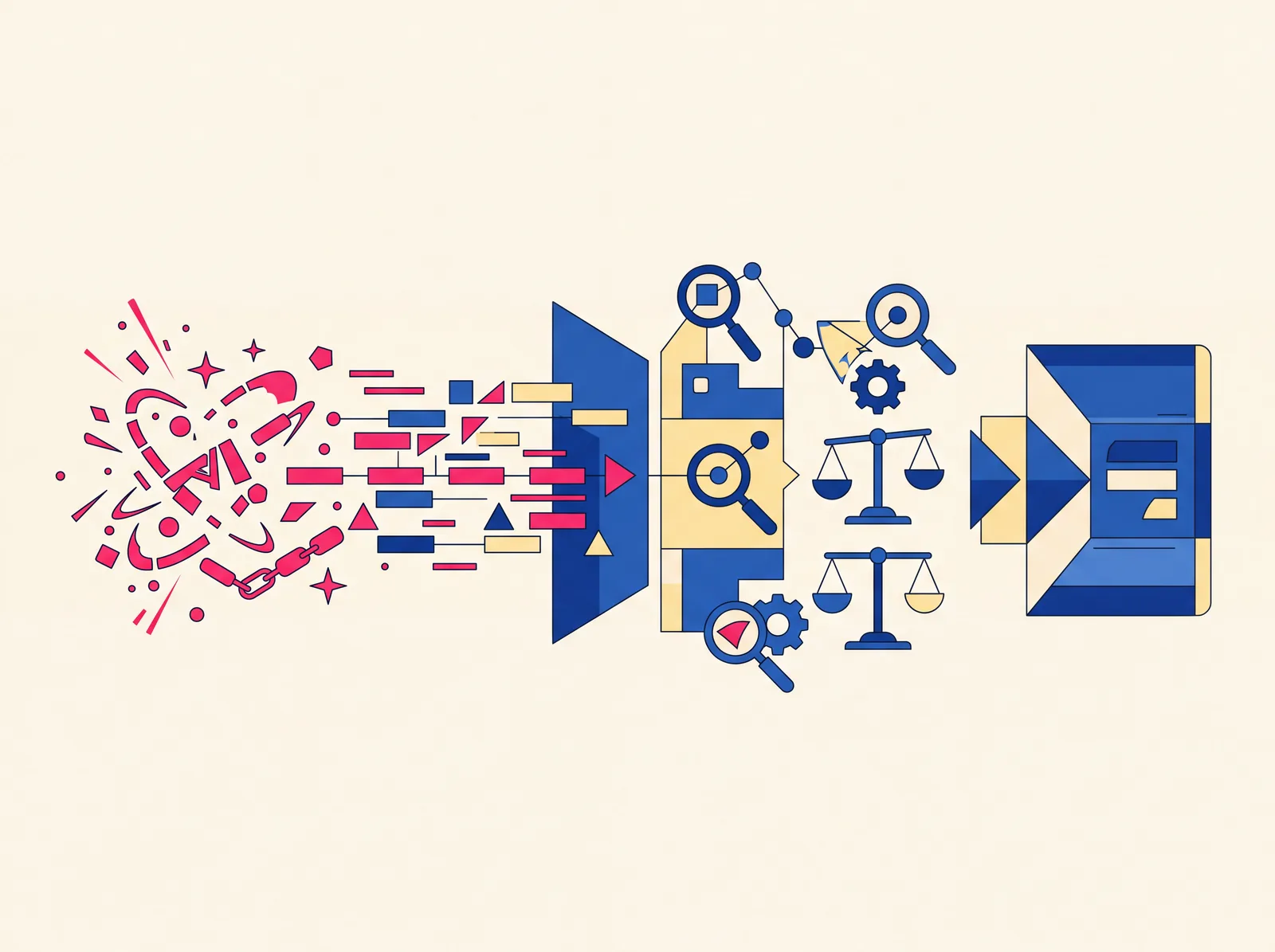
AI-assisted development tools let developers write and test working code significantly faster than before, which is lowering the cost and turnaround time of small custom software builds — the kind a small business commissions, not large enterprise systems. This isn't AI replacing the developer or writing the whole product unsupervised; it's a faster way of getting from "here's what we need" to working software, with a person still making the decisions, reviewing the output, and taking responsibility for it.
What's actually changed
A few years ago, building a custom tool — a calculator, a booking system, a small dashboard — meant a developer writing most of the code from scratch, function by function. That's genuinely slow work, even for something conceptually simple, because writing correct, working code takes time regardless of how well-understood the logic is.
AI coding tools change the mechanics of that process. A developer can describe what a piece of functionality needs to do and get a working first draft in a fraction of the time it used to take to write by hand. The developer still reviews it, tests it, fixes what's wrong, and adapts it to fit the actual project — but the starting point arrives much faster than typing every line manually.
The net effect for a small, well-scoped tool is real: builds that might have taken a few weeks can often be delivered in days, and the total cost tends to drop with it, because a large part of what you're paying for is a developer's time.
What hasn't changed
The parts of a software project that were never really about typing speed are still exactly as necessary as before. Understanding the actual business requirement — what the tool needs to do and why — still takes a real conversation, and AI doesn't shortcut that. Design decisions, about how something should look and behave for the actual person using it, still need human judgment. Testing whether the logic is actually correct for your specific business rules — not just whether the code runs without errors — still requires someone who understands both the code and your business checking it carefully.
This matters because it's the difference between AI making a developer faster at their job versus AI replacing the judgment involved in the job. It's the former, not the latter, for any tool actually meant to be trusted with your business's data or logic.
Why this doesn't mean "cheap" or "instant"
It's tempting to assume AI-assisted development means custom software should now cost close to nothing. That's not quite right, for the same reason a faster typist doesn't make a lawyer's advice worth less — the value was never purely in the typing. Scoping the project properly, making sound design decisions, and rigorously checking the output for correctness are still real, skilled work, and they still take real time. What's changed is that the mechanical part — producing working code from a clear spec — is faster, which shows up as lower cost and shorter timelines specifically for the build phase, not as the whole project becoming trivial.
A build that's rushed through without proper scoping or review just because the code came together quickly is a real risk worth naming directly — speed at the coding stage doesn't excuse skipping the parts of the process that catch mistakes before they become your business's problem.
What this means if you're commissioning a custom tool right now
It's reasonable to expect faster turnaround and a more favorable price than you might have a few years ago for a similarly-scoped small tool. It's also reasonable to ask directly how a studio uses AI in its process — a studio that's upfront about it and still does proper scoping, design, and testing around it is a different thing from one using it as an excuse to skip those steps. BuildYume builds with AI-assisted development as a core part of how tools get built quickly and at a fair fixed price — the scoping, design, and QA around that process are still fully human-driven, not automated away.
If you're curious what this actually produces, our portfolio has real, deployed examples built this way, and reaching out is the fastest way to get an actual scope and price for what you're picturing.
FAQ
- Does AI-assisted development mean the code is lower quality?
- Not if the process still includes real review and testing — the risk is specifically in skipping that step, not in using AI-assisted tools as part of writing the first draft.
- Will AI eventually make custom software as cheap as off-the-shelf subscriptions?
- Unclear, and worth being honest about — the mechanical cost of writing code has dropped, but the requirement-gathering, design, and quality-assurance work around it hasn't shrunk the same way.
- Should I be worried about a tool built with AI assistance being less secure or reliable?
- The relevant question is whether the studio tests and reviews the output properly, not whether AI was involved in producing it — a poorly-reviewed hand-written build carries the same risk as a poorly-reviewed AI-assisted one.
- How much faster is a typical small tool build now compared to before?
- It varies by project, but turnaround for well-scoped small tools has genuinely shortened — this is worth asking about directly when you're comparing timelines across studios.